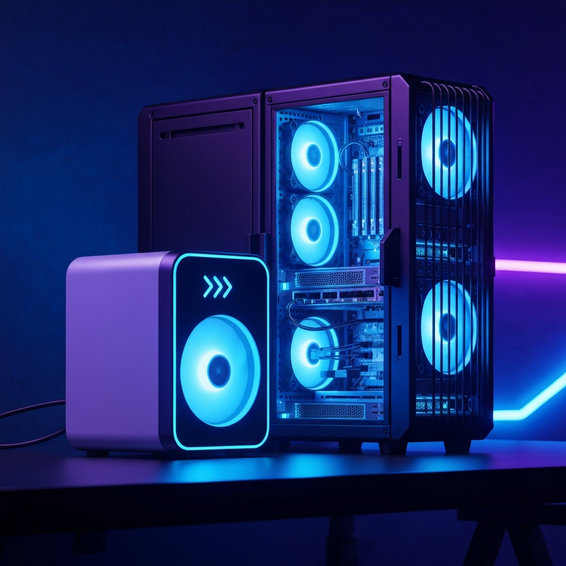
Best Hardware for Homelab Server 2026: Ultimate IT Guide
Thinking about building a new home server or upgrading your current setup this year? Pinpointing the best hardware for homelab server 2026 can honestly feel a bit overwhelming. Between the rapid-fire release of new processors, blazing-fast networking standards, and ultra-efficient micro-architectures, there’s a lot to keep up with.
Whether your goal is to host your own applications, level up your enterprise IT skills, or finally build that massive media server, making the right hardware choices is absolutely crucial. Throwing together a poorly planned rig often results in sky-high electricity bills, jet-engine fan noise, and frustratingly sluggish performance. On the flip side, a thoughtfully designed setup delivers buttery-smooth virtualization while sipping barely any power.
In this guide, we’re going to break down exactly what you need to succeed. From ultra-compact, entry-level micro nodes all the way up to full-scale enterprise gear, we’ll walk you through the top hardware choices for your next build.
Why This Problem Happens: Homelab Performance Bottlenecks
It’s a story we hear all the time: a beginner spins up a few virtual machines (VMs) or a stack of Docker containers, only to be hit with severe lag or unexpected crashes. So, why exactly does this happen?
On a technical level, the root cause typically boils down to three main hardware constraints: a shortage of CPU PCIe lanes, insufficient RAM for caching, and sluggish storage I/O. When you’re running a hypervisor like Proxmox or ESXi, you have multiple operating systems constantly battling it out for the exact same pool of physical resources.
First and foremost, virtualization overhead eats up memory at an astonishing rate. Modern homelab hardware recommendations usually suggest starting with at least 32GB of RAM. This is largely because advanced file systems like ZFS rely heavily on massive memory caching (known as ARC) to perform efficiently. Furthermore, if your system is leaning on slow, traditional SATA hard drives without a dedicated SSD cache, your I/O wait times are going to spike dramatically.
Secondly, network bottlenecks become a major issue when users try to force multi-gigabit traffic through standard 1GbE ports. The moment your internal routing or heavy NAS backup tasks saturate that limited bandwidth, the entire server will start to feel incredibly unresponsive.
If you want to dive deeper into locking down these kinds of configurations, be sure to check out our comprehensive guide on homelab network security best practices.
Quick Fixes / Basic Solutions: Entry-Level Hardware
Looking to solve performance issues quickly without blowing thousands of dollars? Starting with entry-level mini PCs is arguably the smartest approach. These compact powerhouses act as excellent quick fixes, delivering truly exceptional performance-per-watt.
Here are the best basic solutions for putting together a highly capable, low-power homelab server in 2026:
- Intel N100 / N300 Mini PCs: Drawing less than 15 watts of power, these incredibly efficient chips are a homelabber’s dream. They also feature Intel Quick Sync, which makes them absolutely perfect for handling Plex or Jellyfin hardware transcoding.
- AMD Ryzen 7000/8000 Series Mini PCs: Need a bit more computing muscle? Ryzen-based mini PCs bring serious firepower to the table, offering up to 8 cores and 16 threads. They won’t break a sweat handling multiple Proxmox VMs alongside heavy Docker stacks.
- Refurbished USFF Computers: Used Ultra Small Form Factor (USFF) office PCs—think the Dell OptiPlex Micro, Lenovo ThinkCentre Tiny, or HP EliteDesk—remain top-tier choices for budget-conscious builders. Plus, upgrading their RAM and popping in a new NVMe drive is a breeze.
- Upgrading to 2.5GbE USB Adapters: If your current micro server is bottlenecking at the network level, simply attaching a reliable 2.5GbE USB 3.0 adapter is a highly effective, incredibly cheap quick fix.
Ultimately, these compact little nodes are fantastic for running the best self-hosted apps for your homelab without sending your monthly energy bill through the roof.
Advanced Solutions: Enterprise Homelab Gear
For seasoned IT professionals and developers, basic mini PCs won’t always cut it. Stepping up to advanced solutions usually means exploring rack-mountable servers and custom DIY builds. If you are actively planning a Proxmox server build 2026 style, you’re going to need a robust, highly scalable architecture.
Here are the top advanced hardware setups tailored specifically for power users:
- Used Enterprise Servers: Workhorses like the Dell PowerEdge R740 or the HP ProLiant DL380 Gen10 have completely flooded the refurbished market. Because of this, you can easily snag dual-socket Xeon Scalable processors, massive DDR4 ECC RAM capacities, and plenty of PCIe lanes for complex GPU passthrough setups.
- Custom AMD EPYC Builds: Designing a server around a used AMD EPYC motherboard unlocks frankly insane multi-core performance. Thanks to a staggering 128 PCIe lanes, you can confidently attach multiple NVMe enterprise drives and high-speed Network Interface Cards (NICs) without hitting a single bottleneck.
- Dedicated NAS and Virtualization Hardware: Separating your compute resources from your storage pool is a classic enterprise strategy. By building a dedicated TrueNAS Scale box loaded with SAS Host Bus Adapters (HBA) and enterprise-grade helium HDDs, you ensure that your data remains incredibly secure and blazing fast.
- 10GbE / 40GbE Fiber Networking: Making the leap from traditional copper Ethernet to SFP+ fiber optics drastically reduces network latency. Pairing this with used Brocade or Mikrotik enterprise switches allows you to manage massive data migrations with virtually zero effort.
Best Practices for Homelab Building
Throwing top-tier hardware at a wall won’t automatically guarantee a smooth experience. Adhering to foundational best practices is what truly ensures your homelab remains stable, secure, and cost-effective as the years go by.
Optimize Power Consumption: First, always make sure to enable C-states within your server’s BIOS. Doing so allows the processor to drop into a significantly lower power state during idle periods. Furthermore, try to replace those older, power-hungry spinning drives with high-capacity SATA or NVMe SSDs wherever it makes sense for your budget.
Implement ECC Memory: If you plan on storing critical or irreplaceable data, using Error-Correcting Code (ECC) RAM is a must. Because ZFS file systems rely so heavily on strict memory integrity, having ECC memory in place serves as an essential safeguard against silent data corruption.
Focus on Backup Infrastructure: Never, under any circumstances, run your homelab without implementing a proper 3-2-1 backup strategy. You should always maintain a local backup, a reliable off-site backup, and an isolated cold storage copy. To learn the ropes of disaster recovery, take a few minutes to read through our Proxmox VM setup guide.
Recommended Tools / Resources
To squeeze every ounce of potential out of the best hardware for homelab server 2026, you’re going to need the right mix of software and physical networking gear. Here are our top recommendations for the current landscape:
- Hypervisors: Proxmox VE continues to reign as the undisputed gold standard for homelabs. Not only is it free and open-source, but it also boasts fantastic native support for ZFS and lightweight LXC containers.
- Storage OS: TrueNAS Scale—now fully Debian-based—brings incredibly robust NAS capabilities to the table, along with seamless, native Docker integration.
- Managed Switches: If you’re looking to dive into high-speed networking on a budget, we highly recommend the MikroTik CRS305 for affordable 10GbE SFP+ connectivity.
- Mini PC Nodes: Compact powerhouses like the Beelink SER7 or the Minisforum UN100 are nothing short of phenomenal when it comes to establishing a starter node for your virtualization cluster.
FAQ Section
What is the best CPU for virtualization in a homelab?
If you’re keeping a close eye on your budget, the AMD Ryzen 7000 series or Intel Core i5/i7 (13th or 14th Gen) processors currently deliver the best single-thread performance for the price. On the other hand, if you’re building a more advanced, heavy-duty setup, hunting down a used AMD EPYC Rome processor is pretty much unbeatable thanks to its massive core count and abundance of PCIe lanes.
How much RAM do I need for a homelab?
If your plans mostly revolve around running basic Docker containers—things like Pi-hole, Home Assistant, and a lightweight Jellyfin server—16GB should be more than sufficient. However, the moment you decide to start spinning up multiple Windows VMs or heavily utilizing ZFS storage arrays, stepping up to somewhere between 32GB and 64GB of RAM is highly recommended.
Are mini PCs good for Proxmox?
Absolutely! Mini PCs are surprisingly fantastic machines for running Proxmox. In fact, a popular strategy is clustering three mini PCs together to create a highly resilient High Availability (HA) cluster. They sip minimal electricity while providing more than enough computing horsepower to satisfy about 95% of standard home user needs.
Conclusion
At the end of the day, building your own home server remains one of the absolute best ways to learn DevOps, reclaim control over your personal data, and seamlessly automate your living space. Ultimately, tracking down the best hardware for homelab server 2026 comes down to balancing your personal budget against your specific daily workloads.
If you are just getting your feet wet, there’s no shame in sticking to the quick fixes. Grab an affordable, low-power Intel N100 or a snappy Ryzen Mini PC, load up Proxmox, and just start experimenting. Conversely, if you consider yourself an IT veteran, diving deep into the used enterprise server market or meticulously building a custom AMD EPYC rig will grant you the unparalleled virtualization capabilities you crave.
Keep your focus on energy efficiency, always ensure you have a comfortable buffer of RAM, and never skip out on foundational security best practices. If you follow these guiding principles, your 2026 homelab will run flawlessly—and quietly—for many years to come.
About the Author