Best Databases for Modern Applications: A Complete Tech Guide
Sooner or later, every developer hits the exact same crossroads when architecting a new system: choosing the underlying data layer. Make the wrong call here, and you’re staring down the barrel of crushing technical debt, painful latency issues, and eye-watering cloud bills down the line. While spinning up a new application is arguably easier today than it’s ever been, nailing down the foundational infrastructure remains the hurdle where countless projects stumble.
Think about it: if your app experiences explosive growth, relies heavily on real-time data, or chews through complex AI workloads, that trusty legacy database could quickly become your biggest bottleneck. To dodge these all-too-common pitfalls, you need to be deliberate about implementing the best databases for modern applications right from day one.
We live in an era where users expect absolute high availability, global geographic distribution, and zero-friction scalability. In this comprehensive guide, we’ll dive into exactly why your current setup might be holding your team back, while unpacking the top database solutions built specifically for today’s cloud-native environments.
Why Finding the Best Databases for Modern Applications Matters
So, why do database bottlenecks crop up in the first place? If we look back a decade, monolithic apps typically relied on a single, heavy-duty relational database. That vertical scaling strategy actually worked perfectly fine back when user bases were localized and data volume was fairly predictable.
However, the landscape of modern system architecture looks entirely different. Today, we’re building with microservices, leveraging serverless computing, and deploying to edge networks distributed around the globe. When you try to shoehorn a rigid, traditional database into a fluid cloud architecture, it doesn’t take long to hit massive connection limits and crippling memory exhaustion.
A major issue is that legacy databases usually lack native connection pooling out of the box. As a result, they tend to buckle and crash under the sheer volume of thousands of concurrent serverless functions trying to connect at once. On top of that, attempting to force unstructured data into strict relational tables inevitably leads to nightmarish migrations and notoriously slow query execution times.
Ultimately, by selecting a database structure completely tailored to your workload, you dramatically improve the developer experience alongside overall system performance. Embracing a forward-thinking cloud infrastructure strategy ensures that your data flows effortlessly across distributed global networks without skipping a beat.
Quick Fixes: Core Database Solutions
Before jumping straight into complex, enterprise-grade architectures, it’s crucial to understand the foundational database types at your disposal. If you need immediate direction, here is a breakdown of the core database systems that should be in every developer and IT professional’s toolkit.
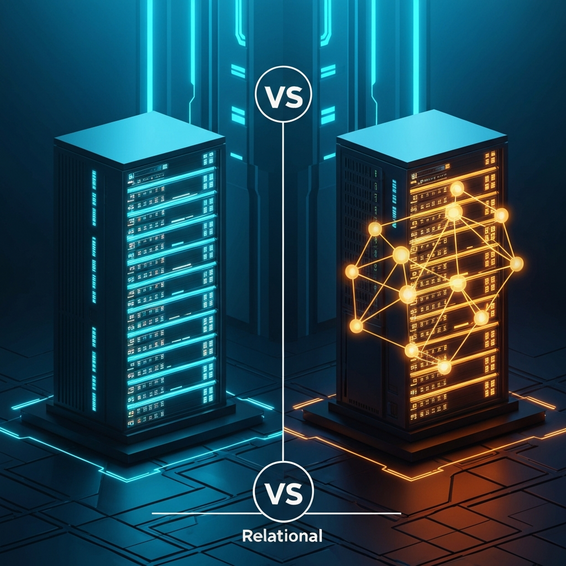
- Relational Databases (SQL): Systems like PostgreSQL and MySQL are still the undisputed gold standard for highly structured data. If your app demands absolute data integrity, handles financial transactions, or relies on deeply interconnected data relationships, SQL remains your safest and most reliable bet.
- Document Databases (NoSQL): MongoDB is the classic example here. Because these databases store data in flexible, JSON-like formats, they are fantastic for agile development, building content management systems, and housing largely unstructured data.
- Key-Value Stores: Think of Redis and Memcached. These provide incredibly fast, in-memory data storage. You’ll find them absolutely indispensable for caching, managing user sessions, and powering high-speed, real-time features like live leaderboards.
- Wide-Column Stores: When it comes to writing massive amounts of data with extreme fault tolerance, Apache Cassandra shines. Tech giants like Netflix and Discord lean heavily on these systems to process mind-boggling volumes of messaging and time-series data.
Advanced Database Solutions for Dev and IT
Once you start scaling a robust SaaS platform, those standard out-of-the-box setups simply might not cut it anymore. From a modern DevOps standpoint, high-traffic applications demand infrastructure natively designed for auto-scaling, serious fault tolerance, and ultra-low-latency global access.
Serverless Databases
Anyone who has managed raw database instances knows the headache of constant tuning and maintenance. Serverless databases—think PlanetScale, Neon, or Amazon Aurora Serverless—completely abstract away the burden of server provisioning. Instead of guessing your capacity, the system automatically scales compute resources up or down to match your real-time traffic spikes.
The beauty of this model is that you’re only paying for the exact compute power you actually consume. Furthermore, these serverless options usually come with connection pooling baked right in, meaning they can effortlessly handle thousands of simultaneous lambda functions without dropping a sweat.
Distributed SQL Systems
What happens when you desperately need the strict ACID compliance of SQL, but you also crave the limitless horizontal scalability of NoSQL? That’s exactly where Distributed SQL steps in. Cutting-edge platforms like CockroachDB and YugabyteDB are engineered to seamlessly span multiple cloud regions and availability zones.
This architecture guarantees virtually zero downtime while providing lightning-fast access to users regardless of their physical location. If a single node goes offline, the system simply auto-heals and reroutes traffic, requiring zero midnight wake-up calls or manual intervention from your engineering team.
Vector Databases for AI
It’s no secret that Artificial Intelligence is powering the next major wave of software development. Because of this, vector databases like Pinecone, Weaviate, and Milvus have emerged to specifically handle high-dimensional vectors. If your roadmap includes generative AI integrations, you can dive deeper into the mechanics in our AI technology resources.
These specialized databases are the silent engines behind advanced semantic search, sophisticated recommendation algorithms, and complex LLM (Large Language Model) interactions. Traditional relational databases simply aren’t built to execute complex mathematical similarity searches at the blistering speeds demanded by modern AI tooling.
Best Practices for Modern Data Management
Even the most expensive, state-of-the-art database will crumble under pressure if it isn’t configured correctly. To ensure your data layer stays remarkably robust and performs flawlessly, you should weave the following optimization and security best practices into your workflow.
- Implement Connection Pooling: If you’re running PostgreSQL, routing traffic through a connection pooler like PgBouncer is non-negotiable. It stops your database server from completely exhausting its memory when hit with thousands of concurrent client connections.
- Strategic Indexing: It sounds basic, but missing indexes remain the absolute biggest culprit behind sluggish queries. Make it a habit to run EXPLAIN ANALYZE on your database to scrutinize execution plans and spot hidden bottlenecks before they impact users.
- Read Replicas: Don’t let heavy analytics or reporting queries drag down your main application. Offload those intensive tasks to read replicas so your primary write node stays snappy and responsive for your actual users.
- Security and Isolation: Treat database security with a healthy dose of paranoia. Keep your databases completely off the public internet, utilize VPC (Virtual Private Cloud) peering, lock down access with strict IAM roles, and absolutely always encrypt your data at rest.
- Automated Backups: Make sure you have automated, point-in-time recovery backups turned on. More importantly, schedule regular drills to test your data restoration process—a backup is practically useless if you can’t rely on it during a catastrophic failure.
Baking these vital strategies directly into your DevOps pipelines will do wonders for reducing unexpected downtime while simultaneously giving your developers the confidence to move faster.
Recommended Tools and Resources
Managing distributed infrastructure doesn’t have to be a nightmare if you leverage the right ecosystem. By integrating modern, developer-centric tools into your daily workflow, you can eliminate hours of manual configuration. Here are a few standout tools worth exploring.
- Prisma ORM: This is a fantastic next-generation Object-Relational Mapper tailored for Node.js and TypeScript. It takes the pain out of database interactions by making them heavily intuitive, fully type-safe, and incredibly developer-friendly.
- Supabase: Often hailed as the premier open-source Firebase alternative, Supabase hands you a fully managed PostgreSQL database from the jump. It also bundles in robust authentication and real-time data subscriptions so you can start building immediately.
- Aiven Database Services: If you need a comprehensive platform for deploying open-source data infrastructure across various clouds, Aiven is top-tier. They provide fully managed Kafka, PostgreSQL, and Redis clusters without the usual operational headaches. Explore Aiven managed services to simplify your overarching multi-cloud data strategy.
- DigitalOcean Managed Databases: For teams seeking a highly performant yet remarkably affordable cloud provider, DigitalOcean is brilliant. They strip away the steep learning curve traditionally associated with maintaining and scaling database clusters.
Frequently Asked Questions
What is the best database for a web app?
While it’s tough to name a single “best” option, PostgreSQL is widely championed as the smartest default choice for the vast majority of web applications. It brings legendary reliability to the table, boasts an incredibly rich feature set, and even offers fantastic JSON support if you need to build hybrid data structures.
Should I use SQL or NoSQL for modern applications?
This decision should be driven entirely by the shape of your data. Lean toward SQL when you’re dealing with structured, highly relational data where strict transactional consistency is a must. On the flip side, NoSQL is your friend when handling largely unstructured data, prioritizing high write throughput, or iterating rapidly on a new product.
What is a serverless database?
In simple terms, a serverless database takes over the heavy lifting of scaling compute and storage capacity based on your app’s live traffic demands. Development teams never have to manually provision or tweak physical servers, and you only pay strictly for the compute cycles you actively use.
How do vector databases work in modern apps?
Vector databases function by storing complex data points as mathematical representations known as vectors. They are heavily utilized in the AI space because they can near-instantly compare the mathematical “similarity” between massive datasets—like text documents, audio clips, and image files—making them perfect for search engines and recommendation algorithms.
Conclusion
At the end of the day, locking in the right data infrastructure is an absolutely critical step toward building resilient, high-performing software. Once you truly grasp the distinct strengths of SQL reliability, NoSQL flexibility, distributed architectures, and AI-optimized vector systems, you’ll be well-equipped to architect a completely bulletproof backend.
Ultimately, the best databases for modern applications are simply the ones that make the most sense for your distinct workload, your team’s technical background, and your long-term scalability targets. If you’re kicking off a brand-new project right now, sticking with a rock-solid relational powerhouse like PostgreSQL—or opting for a managed serverless platform—is almost always a smart, future-proof play.
Take the time to audit your current data structures, keep a close eye on your query performance, and never shy away from adopting modern managed services that allow your application to scale effortlessly!
About the Author